

#67 The work is now.
in an imperfect world, don't seek perfect politics. the time is now.
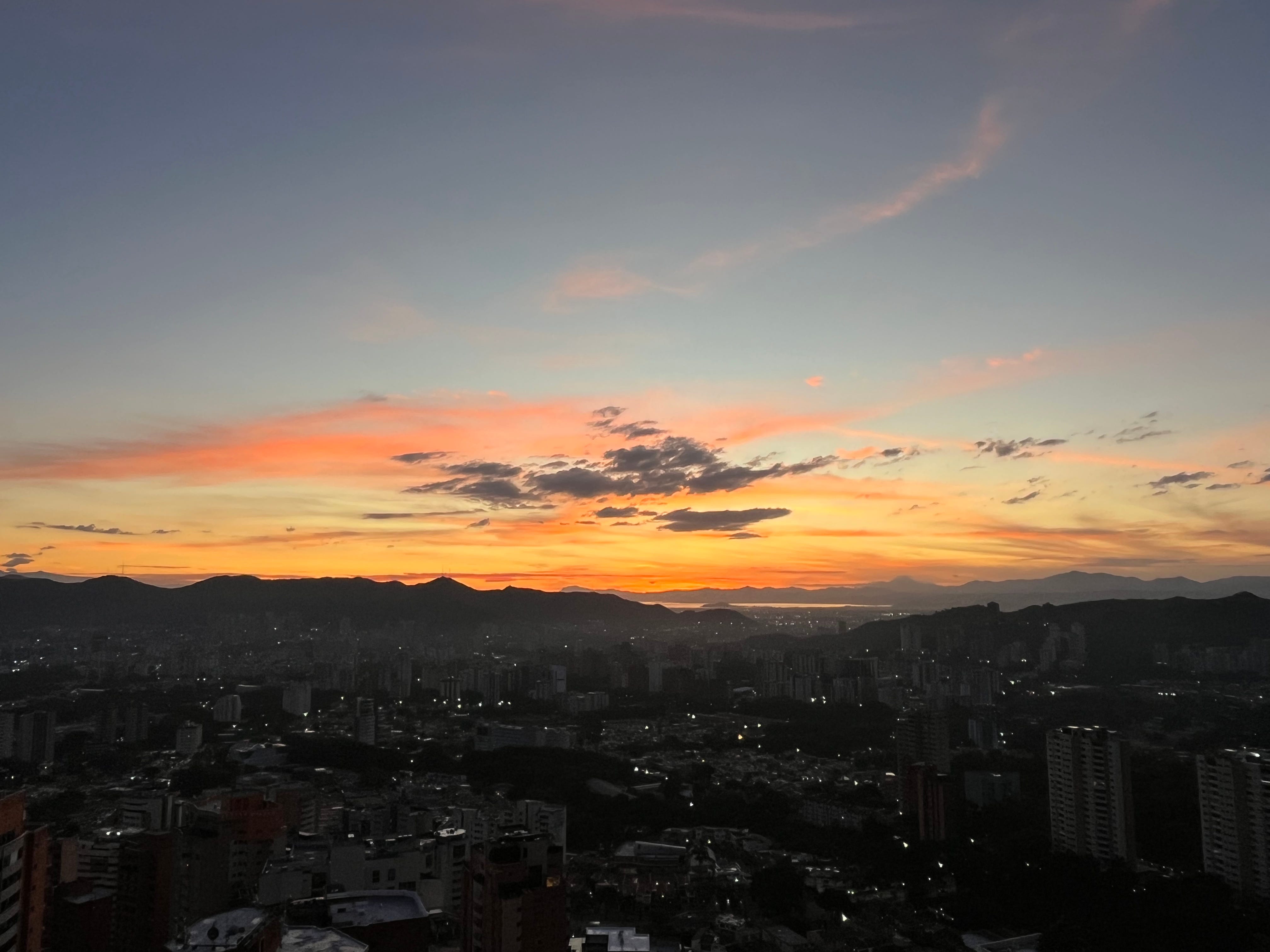
“We forgot the eggs,” I told my dad one afternoon, bright 3 p.m. sunshine streaming through the windows, the sun’s gaze on the mountains - and the pavement far below - unforgiving. Sweltering outside, it must’ve been somewhere around 30 degrees when my sister and I took a trip to the grocery store, a five minute drive away in a car-centric city in Venezuela. We stop at one of the two stoplights on our way there and a kid who must not be above age thirteen stands in front of us, his skin warm and a honey-brown, juggling three worn-out tennis balls, his hands moving quickly and dexterously. for your consideration, for your entertainment. I tell my sister with what can be read as gigantic, tone-deaf privilege that I don’t know how to stand it; every day this kid is at the stoplight, juggling tennis balls with his two other friends, walking down a straight line after a quick show, asking for tips. How much longer are they going to have to do this? I ask her.
The answer has been evading us for approximately 26 years.
Most of the context of Venezuela in the past week, specifically the first week of 2026, you are already aware of. You already know the familiar beat taking over your Instagram feeds, BBC News, The Guardian. Notice how I combine Instagram among two reputable news sources - myself included, we all seem to digest more news, more frequently through a few minute-long reels or carousel posts breaking down complicated issues. You’ve seen the videos of ICE tearing families apart across the U.S. and you’ve seen videos of children in Gaza, crying as their parents’ bodies are covered in sheets. Now you’ve seen videos of Maduro being perp-walked in New York City on his way to a much-awaited trial, set to take place on March 17th. You’ve also seen the videos outlining the ongoing discussion of polarization in politics - it’s not left vs. right - it’s liberation vs. authoritarianism. So on, and so forth.
A few people I know have posted tid-bits and clips outlining the past week in Venezuela, U.S. interventionism, the harm the Trump administration has been causing for months in the region, and beyond. The incessant pursuit of oil and power. Again, you know all of this - you’ve seen it play out. You’ve also seen protesters claiming “Hands Off Venezuela”, outlets like novaramedia claiming Maduro was an elected leader of a sovereign country, or accounts I follow like thought leaders in community work, social impact and beyond decry the removal of Maduro from power.
What has always been most fascinating is the puritanical and moralized perspective of the Internet Left. I call it the Internet Left (although, somewhere, someone must’ve already come up with a much more clever name for it) because it’s being a leftist for the idea of being a leftist’s sake; they seek perfect political worlds where we don’t have to make negotiations, where compromising is seen as corrupt, where coalitions can never be “clean” of this moral high ground they seem to stand on. It is also furiously reductive, dangerously ignorant and overall, deeply simplistic. I’ve seen moralists on the Internet Left call Maduro a leader of a sovereign country, and it makes me laugh more than it makes me angry - I am able to tune out ignorance alarmingly quickly these days. The times where I’d be ragebaited on the internet are long over; have been long over. I like to use my rage towards more efficient, helpful ways. Turn over my rage, boiling in my stomach, making my head feel light and heavy at the same time, and choose to consume differently, spend my money elsewhere, spend time doing things that will make something materially better - give away clothes, sign up to Doctors Without Borders monthly donations, drop a letter to my neighbors wishing them a happy 2026. Things like that. But I digress.
The question of how to explain Venezuela to people who are not Venezuelan is not new. Neither is the typical perspectives our country’s situation is viewed from abroad:
Venezuela is often reduced to a morality play: a noble project sabotaged from abroad, or a cautionary tale stripped of agency. In both cases, Venezuelans themselves disappear. We are either victims of external forces or footnotes in someone else’s ideological argument.
How does it feel, really? When I walk out into a bar and meet someone new and, upon answering the typical where are you from, and the immediate response is a mild, polite grimace, and a question, oh it’s really bad there isn’t it? Unsure, what exactly, I am expected to say here. Are they looking for a deeper conversation into my place and feelings about being from a country in perennial free fall? Do they want to dissect the ways in which my identity has become a thorny subject because of the rage I feel, the injustice, and the sheer unwillingness to still, never give up what is rightfully mine - the mountains, the valleys, the sea? How it will long, long outlive any dictatorship?
No. Of course not.
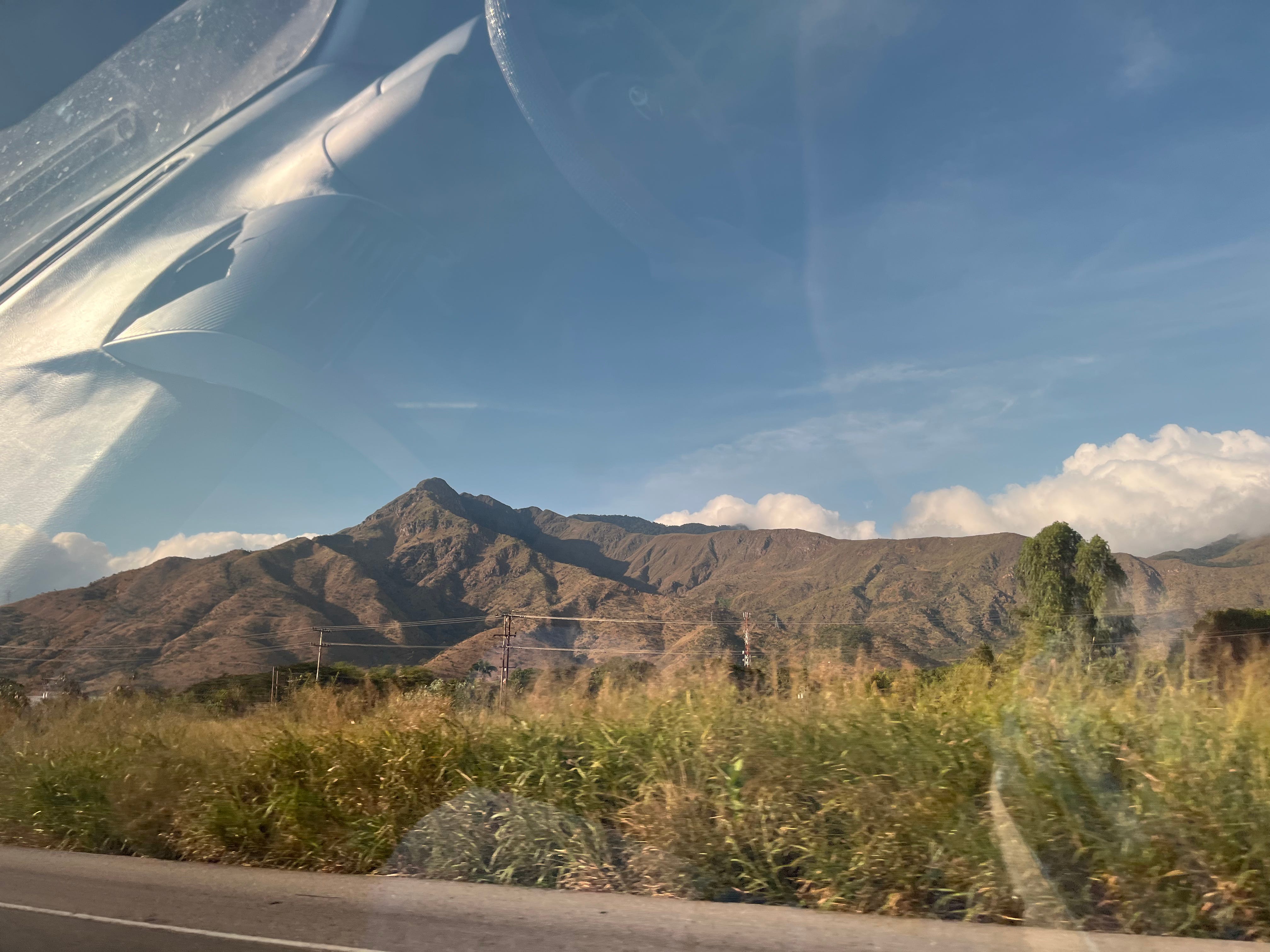
A few days after going grocery shopping, I am reading more news on my phone, specifically Reuters this time. My browser history is familiar with this dance: “reuters venezuela” has been searched for nearly every day since November 21, when a U.S.-issued 90-day warning was published, deeming Venezuelan airspace “unsafe” for air traffic, effectively paralyzing air travel to and out of Venezuela. Never mind me or the thousands of Venezuelans flying in, or hoping to fly out, expecting holidays with their families. The freeze would continue well into December, a few Venezuelan people who also lived abroad posting the sad news on their timelines, unable to spend Christmas at home, or stranded in Madrid or the U.S., waiting for a next flight back. Many had to buy last-minute tickets they couldn’t really afford, thousands of dollars spent trying to exit or get back into the country.
Outside, life continued with regularity: no panic-buying in the grocery stores, no long lines for any essential service, really, beyond the typical wait-time spikes at the gas station. It was around that time I increasingly began to think of the U.S. as what it really is: a business. The reason it runs the way it runs is not because it is a country - it is a business. Anyone who tells you any different isn’t only lying - they’re willfully ignoring history.
Politics of extraction and exploitation are as old as modern civilization is. For every privilege and benefit in one corner of the world, one very “lucky” country, another one is bleeding. You can rest assured of very few things in this world, but you can rest assured of this. The immensity of it is certainly overwhelming and would take too long to type out and write in its entirety, and I lack the knowledge and expertise to walk you through these dystopian realities. You also, already know most of these.
But what is really insidious in this entire ordeal hasn’t even been the inevitable geopolitical interest in Venezuela, the endless barrels of oil in a warming planet, the incessant demand for more, more, more. It’s the desperation many Venezuelans felt around me when I’d bring up the legality of the Trump administration’s treatment and bombing of boats off the coast of Venezuela, or a potential invasion. The general consensus seemed to be that things couldn’t be worse, and so perhaps U.S. intervention was the only way it could get better. Someone’s going to make money off it - that was never the question. Which is why I found the Internet Left delusional and frankly, insulting. It was about whether the young boy at the stoplight would ever, eventually, see even if a small percentage of profit turned by oil channeled into public schools, an education, access to electricity and running water, to be able to pay for a new pair of shoes.
You see, the issue with these online debates and speculations about what will happen next that fill my WhatsApp these days is exactly that: they are online. In the days that followed Maduro’s removal, social media went into an immediate frenzy, if not long-form think pieces about the consequences: many leftists condoned the move, many Trump-supporters - especially Venezuelans living in the U.S. - celebrated, posting photos of “freedom”, going outside with their flags and caps, dreaming of a finally free Venezuela. On the ground, my sister tells me the streets are empty: no one is going in or out of their houses. There’s long lines in the grocery stores for a day or two, people stocking up, looking for bottled water and canned foods. It’s quiet; every non-essential business is closed. She tells me she hasn’t slept well in days. She’s unsure of what to say. She’s relieved, but she’s also scared. What comes next? The only people who seem to celebrate are Venezuelans abroad; romanticizing the idea of another Messiah who has come to save them - this time from the Right - the irony doesn’t escape me. In my family groupchats, we turn on disappearing messages once again, remind our eldest aunts and uncles to watch what they post on Instagram.
Security forces have established numerous checkpoints around the country to stop vehicles, question passengers and search their phones for signs of opposition to the government, rights groups and Venezuelan citizens said.
“They went through people’s phones, opening their WhatsApp and typing in keywords like ‘invasion’ or ‘Maduro’ or ‘Trump’ in the chats to see if they were celebrating Maduro’s arrest,” said Gabriela Buada, director of Human Kaleidoscope, a Venezuelan organization that is tracking the crackdown.
The contrast with Venezuelans in El Doral, Florida is, at the very least, striking, if not offensive or downright tone-deaf. What exactly are we celebrating? What, in God’s fucking green Earth, are you thinking?
Pardon my French.
So, what happens next? I don’t have the answers for you - neither do the seemingly hundreds of political analysts sharing their takes on Instagram, nor the legit ones who are speaking on Al Jazeera, the BBC, and beyond. All we have is theories and hypotheses, and our own reservations and deep cynicism of a regime that has one thing we don’t have - an iron-clad, sociopathic desire for more they refuse to rein in, and a well-versed, deep-rooted love for ideology, honoring their Messiah, their leader - Hugo Chavez. He played all of this incredibly well to make Venezuelans foam at the mouth at any mention of socialism or simply, the welfare democracy. Hence, I am unable to have productive conversations with many Venezuelans, really. It seems impossible to hold several truths at once: no, I do not support the regime. No, I don’t support U.S. intervening, either. Yes, I feel a sense of relief. No, it didn’t last long - a snake with many heads is what we have, chopping one off does not make a significant difference. And yet. Do I hope it begins a period of transition, years as though it make take, of change? I do. Of course I do.


Much has been written, and will be written, in the days, weeks and months ahead. Some ideological purists will keep claiming Maduro was a wrongfully kidnapped leader of a sovereign nation. Trump supporters will applaud his tough policy and his Donroe Doctrine. Others — many others, I think — like me, will feel a discombobulated sense of self, the echoes of the permanent dislocation migration brings, the relief of the head of a snake with many heads behind bars, the reverberations of uncertainty pounding at the base of our skulls every morning, dreading the next heads of the snake, the way a dictatorship has found a way to starve, murder, and incarcerate thousands, and displace millions of people, in under 30 years.
Much will be discussed in the days, weeks and months ahead. But in my mind’s eye I still see that teen boy at the stoplight in my hometown, juggling worn-out tennis balls for change. I still see a mother and her baby, selling lollipops in the dilapidated city center. I still see the young boy who hugged me, dropping off donations at an empty church after Christmas. I still see young men offering a quick windshield cleaning at the gas station. The smell of petrol on the pavement, heat emanating off it, Sunshine bouncing from our windows, heat surrounding everything.
When I think of the reality of the world, I don’t think about the moral high ground of the Internet or the deluge of Instagram reels, or the virtue signaling, or the hot takes coming from Idealist Leftists who would rather spend time debating their impeccable political stances than the lived realities of people affected by them. The truth is, either spectrum of these politics are deeply uninteresting to me. I am far more interested in our work with communities, where we put our money, where we invest our time, who we’re helping, where we look for joy.
Is there anything I can do for you, my friends ask.
Yes, there is something you can do for me. If you expect a village, be a villager. Invest your money where your mouth is. Spend more time giving things away and commit to at least one place that sends over resources to a cause of your liking. Stop waiting for your governments to represent you. Stop waiting for perfect politics, for the right representatives, for the work to get done. The work is now. It was always now.