

#2: Hometown Glory & God-given signs
about leaving home and the parallel lives we live
I've been home for about 3 weeks now, with 3 more weeks left on this side of the world. The last time I was here was February 2022, after about three years of waiting, delayed by the pandemic, somewhere in the Netherlands. That first trip back was marked by the relief I felt, my face warm with the Sun, my fingers touching the window of the plane as we landed that afternoon. Three years is a long time, and in a world where everything felt stagnant for so long, homecoming glory tasted different. So much more vivid, clear, so much more nostalgic, bittersweet.
At the time, I was confronted with a decision I took back in 2015: leaving my home country in pursuit of higher education. A degree, a door, something that would open up the world in ways I had always imagined, from as early as age 11. I went to a school where emigrating was the norm, not the exception; seniors who walked down our hallways would later go on to Canada, the US, maybe Spain, and fill their lecture halls for the next four years and often settle there indefinitely. Many would come back for annual visits and holidays, but most of them would decide to remain in the countries they went to at 18. At the time it seemed laughably normal, a fact to accept, a rite of passage, adulthood waiting at the end of those four years.
What they don't tell you when you make a decision like that at 18 is how you won't be staring at your parallel life in the face when you're away. Instead, it will show up in the form of a question once you return.
I wasn't someone who spent nights ruminating on my decisions when I was in university. I was too busy with the newness and excitement that being “abroad” was flooding my life with. I had lectures, exams to pass, and there were new friends to make, my first “proper” clubbing experiences to have. Having left Venezuela in the aftermath of the guarimbas in 2014 and the severe food scarcity in 2015 and soaring crime, my late teens were about house parties turned sleepovers, driving back home in the morning. I never knew what it was like to hit the club in my hometown, pick up arepas at 6 in the morning after the party's over. I was wide open, wanting to see the world and how it moved.
My visit last February saw me contend with the question I hadn't asked myself in uni, hadn't asked myself at my previous full-time job, hadn't seriously considered until then, seven years on: what would life be like if I moved back? If I just spent more time here every year onwards, maybe started working from here, maybe then I could like it, rediscover everything I never experienced, as if a different life was waiting right on the other side of a nine-hour plane ride.
And it was. But looking back, the question came from a place of homesickness, of wanting to understand more about where I am from, rather than wanting to know where to go from here.
It was a sense of nostalgia for the things I never experienced, a bittersweetness at the knowledge that my younger sister did. I am from a generation of young Venezuelan immigrants who were in-between periods —severe scarcity, corruption, crime and political unrest— who felt that leaving, if we could, was the best choice we could make. I may have had alternatives, but it never felt like I did. It's taken a long time to see that those two are different things.
I'm on a second visit within a year. I flew in mid-December, and am leaving again mid-January. It tallies up to another six weeks of being home, three months in a year, and this time the questions were still there, but they took different shapes. I was confronted with an unflinching reality in my ageing grandmother: what can happen to you when you spend a life so committed to survival, you find little time to live. How the relationships you build are one of the most important in any kind of life. How the quality of a life is directly correlated to the quality of the relationships we have.
When I returned from my first visit in March last year, I went to a networking event for a photography gig. I met a Colombian lady in her fifties, warm, welcoming and very talkative. For the first few days since returning to the Netherlands, I had been split in half —happy to be back in my habitat, meeting my friends, back in a time zone we all shared— but I was also simmering with homesickness underneath it all.
The what if's were getting louder, more frequent. I was still waiting for approval from the immigration office on a permit I'd been hoping I'd get for months - it had been up to 5 months of waiting at that point. I was searching for answers without knowing it.
At the event, she and I got to discussing everything about family, being Latina, and feeling a bit like an alien back home, but also a bit different from people here. I told her I felt like there was a life I could be living in Venezuela, and that I felt I missed out on so much already. There was so much I didn't get to see. So many things I didn't experience. From birthdays to births to deaths in my family, to simple things; getting coffee with friends at our favorite spot, weekends at the beach. I never had a first date there, never went to university in my hometown. It was surprising to find that I'd miss it, I'd spent so long imagining a different life altogether, but it turns out I did.
She was adamant about the fact that I had chosen right. She understood where I was coming from, she said. She'd spent some time considering her choices, just like I had. But then she pointed out a very singular, key difference: it was one thing to visit where you’re from, a place you once left, enjoy all the things about it that made you miss it. Spend time with family, rejoice in each other’s company. But it is another thing to live with them, to spend your lives with them. As much as I’d missed them, they each had their own lives to live, she said. Something to go back to: relationships, routines, jobs, different purposes. In this context, a visit is different from everyday life.
Back then I thought she may be right, if a bit harsh, a bit direct, something I wasn’t too used to from someone I’d just met. But by the end of that conversation, having told her how I’d been waiting for my residence permit, frozen in time, she hugged me and said it would come. She told me I’d made the right choice. That it would happen. And a few months later in October, it did.
Looking back I know she was a sign, embodied. A way of the world to tell me that I’d chosen right. I needed a push, needed to hear from someone like me that it could work, that my dream of continuing life abroad didn’t mean that I shunned the life I had at home. It was just different. That two worlds could coexist without one taking preference over another. There would always be things I miss from home, and I’m lucky to be able to say that and truly mean it. But there would always be things to miss from my life there, too.
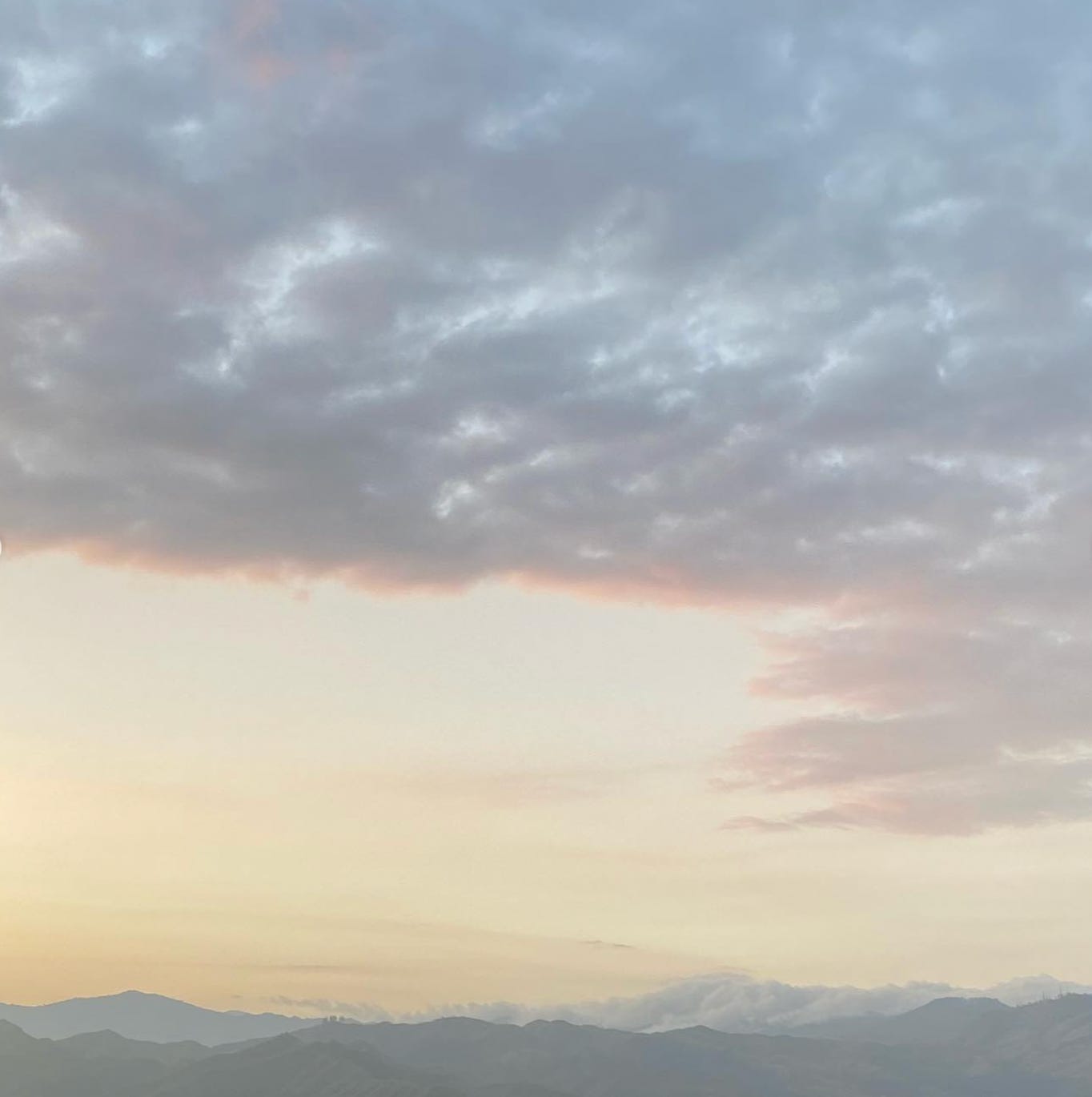
Now it’s January, and I’ve been staying in my childhood room, one I only spent a couple of years in before I moved to a second home with my mom. Here, the house remains largely the same: my dad lives here with his wife, my sister lives in the room next to mine. I can still sit in the terrace that overlooks the city, mountains blanketed with clouds, where the sun rises and sets at the same time every day, all year. I have three weeks of the sunshine, blasting 30 degree heat left, and then I’m back to the life where I wear coats until April, five hours ahead, where seasons change and I am another twenty-something in Amsterdam, in a flutter from one thing to the next.
Being home isn’t about the next best thing, not for me. It’s a suspension, really: time freeze-frames in a good way, and I taste all those flavors I’d missed, look at the mountains every day, feel the sun on my face. I reconcile with a reality where there’s two of me, two lives that intertwine a few times a year, and this time I don’t feel as split. In this world, both of us can coexist.