

#14 The lonely city
about Amsterdam in my early twenties
(My) long-awaited letter about a strange time in my life.
I first moved to Amsterdam when I was 21. I had just graduated from university, a place where time was suspended for the most part of the three years with 12-hour “study” sessions in the library (thank you Polak), attempts at club photography (ESN Tuesdays, every Tuesday, for 2 years), and a sprinkle of dating app ventures and unrequited crushes. When I first moved to Rotterdam at 18, I had the world to gain and nothing to lose. Before me stood an endless road of possibility. I left Venezuela behind in a much different economic and social context than where it is today —my sister will be 20 in November and has no plans of ever leaving— in 2015, after waves of protests, nationwide food insecurity, and government-sanctioned violence, staying when I had the opportunity to try something new felt like settling for some semblance of comfort. And I had it easy. I was supported by my family, financially and emotionally. I was a student before anything else; picking up jobs helped me support myself but they weren't my only income. Making a choice was easy in some ways and more difficult in others, just like everything else.
It also meant I wouldn’t have to make many more choices for three years other than what courses to take or what to write my essays about. For the rest, university was one big experiment. I made friends from different places, went to clubs for the first time ever, ventured into the dating world, explored more of myself. By the time I graduated, I was 21, and suddenly, there was much more to lose. I had to start working full-time instead of opting for a second degree, which wasn't so much a problem rather than a new source of fear. I couldn’t stay in the safe, known confines of school. The structures that held me together for years —not only abroad but back in high school too— were disappearing and sliding right out underneath my feet. My visa process began all over again. I caught myself thinking this was a new choice I was making. A conscious one. I decided to stay, to build the start of a career, somewhere foreign and new. It wasn't the familiarity of the Food Plaza or Polak anymore. I wasn't set in stone to remain here for another three years, a structure laid out in front of me, anymore.
In the meantime, most, if not all of my friends, continued their studies. They remained in Rotterdam, while my first job was based in Amsterdam. I remember the first six months; commuting from one city to the other every day, arriving by 7 p.m. in time for dinner, sleep, and repeat. I was enjoying the adjustment to a full-time schedule; the company was a startup on UvA’s campus in the center of Amsterdam, and a chance to grow in my field. But I missed being back in Rotterdam, missed being a student, too. In April 2019, after signing a more stable work contract, I moved to Amsterdam. I thought of it as a practical thing as much as it was an emotional one. First: it made sense. I wouldn't have to commute anymore. It was where I was spending most of my time, so it was a good time as any to try something new. Secondly: my friends were close to finishing their degrees and I knew they might leave Rotterdam. Nothing would be the same. I was afraid of it: the change coming towards us, the strangeness of living in Rotterdam without the same group of friends I'd kept for four years. It would be easier, I thought, to leave before I was left behind. To start anew.
But it was deeply isolating. I was the only one in my group of friends who started working full-time back then, and I had no one to directly compare my experiences to. I was paying over half my salary in rent in Amsterdam, in an overcrowded apartment complex with deeply racist neighbors. Once September arrived, a year after I joined the company, I started hitting walls. By the winter of 2019, I felt increasingly lonely. The four people I lived with all moved out, leaving 4 new flatmates — a total of 8 different people in only 8 months. My friends remained in Rotterdam, where I started spending my weekends. I'd go twice a month on average, sometimes 3, excited to see the Marriot building over the horizon, metal and grey feeling like the most welcoming sights in the world. I always felt sad coming back to Amsterdam. Alone again. Displaced. Even as I befriended colleagues who I'm still close to today, even as I dated, even as I built a sense of home, even as I frequented cafés and bookstores and second-hand shops every weekend to build a sense of community. I joined a weekly writer's meetup. I joined yoga lessons. And yet there was a sense of disconnection, of loneliness in the city.
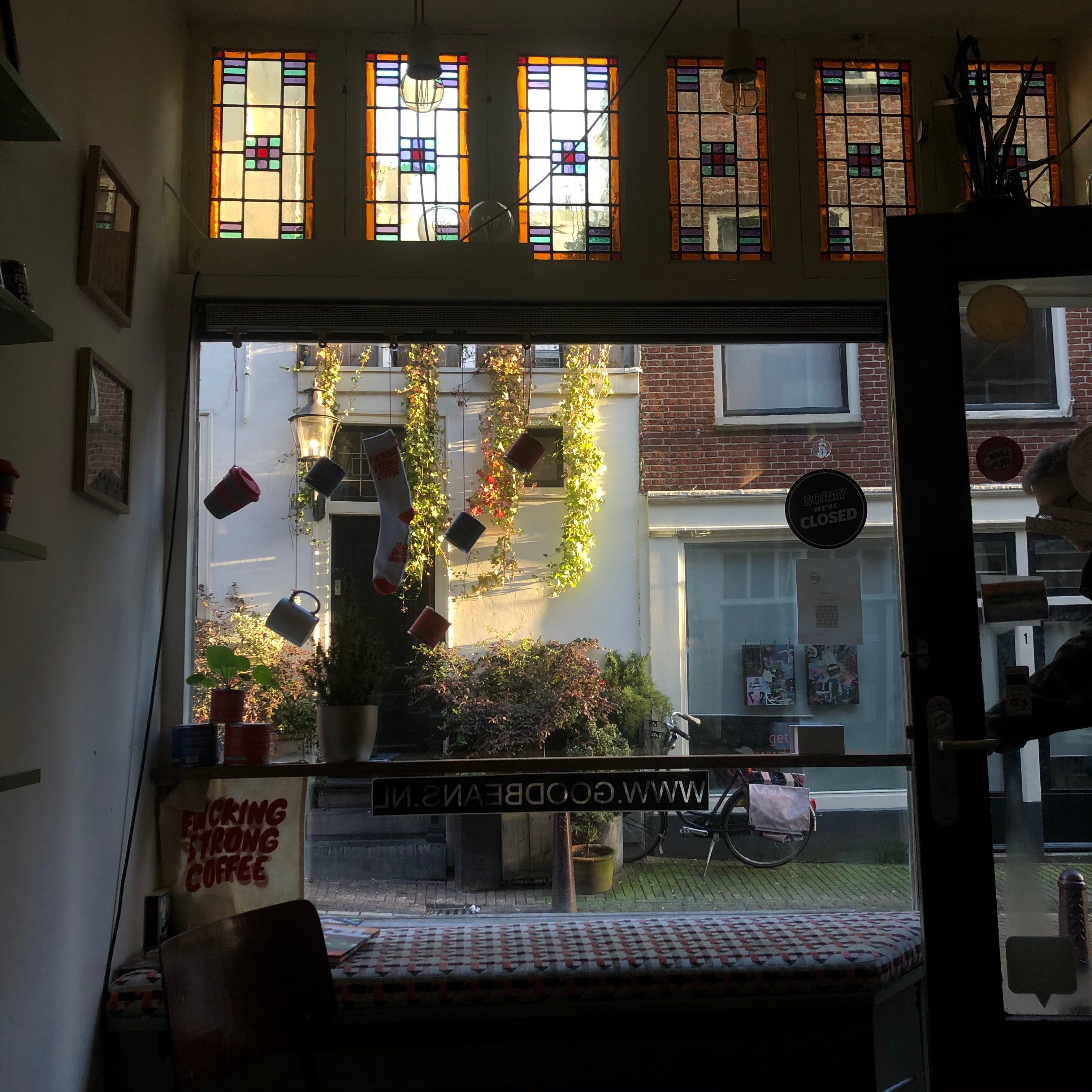
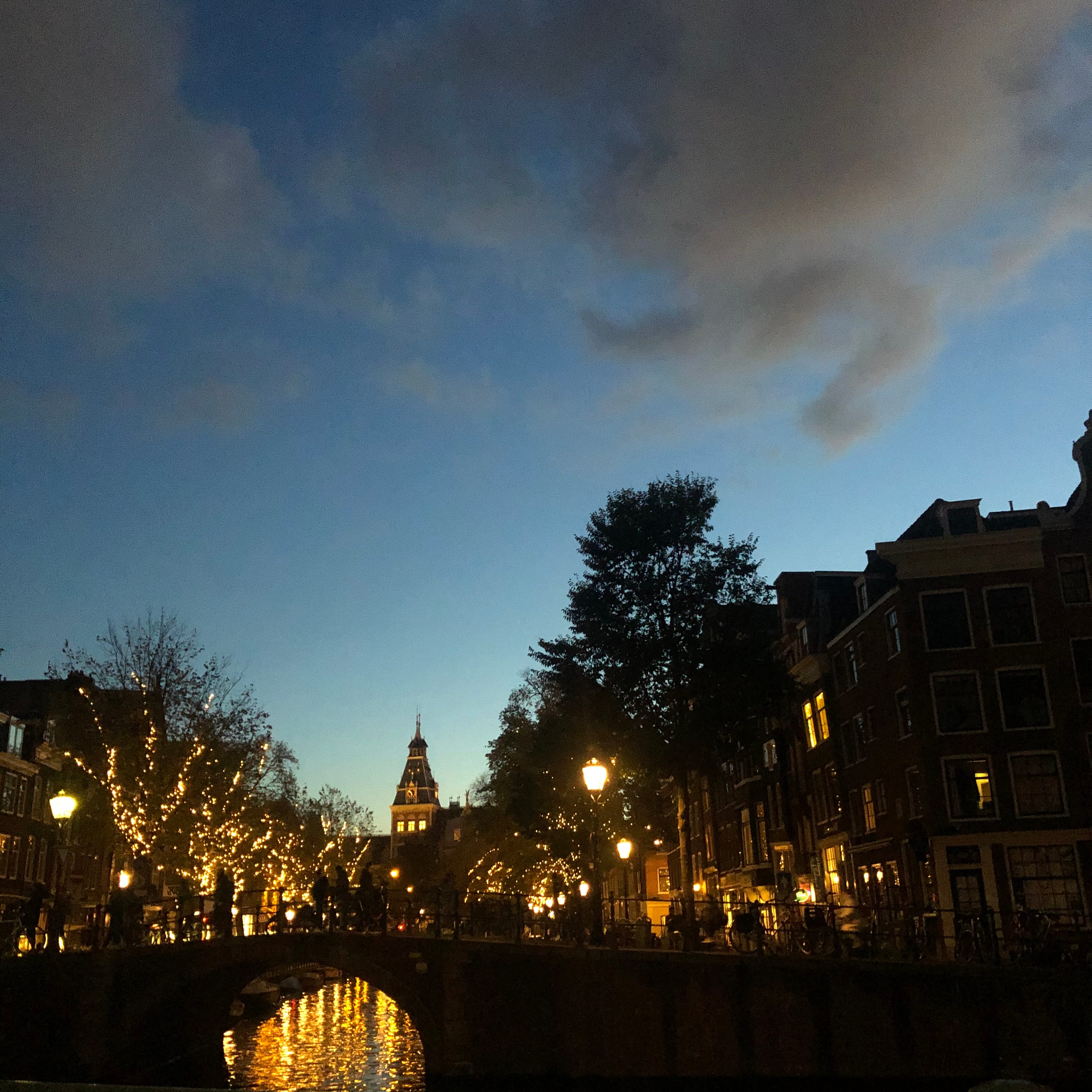
Around the same time I'd picked up The Lonely City, a part memoir, part art history, part sociology book about loneliness as a human condition, city living, and our desire for connection in the very technological 21st century. I look back on the parallels between Laing and myself and I think it was, in some way, foreboding. Here we were, two women living in cities, (albeit she lived in New York, a much daunting monster of a city by any account), myself in Amsterdam, both of us unsure of how to navigate something as universal as loneliness. In densely populated cities, in places where we may see hundreds of people and yet interact with very few of them, if any of them, at all. I felt acutely lonely when I walked through the 9 Streets, BMWs lining up the canals, big houses with impossibly sparkling chandeliers, events on every corner, expensive bars filled with young urbanites, canal houses silently lit in the evenings and beauty everywhere you looked. I resented the charm of the city, how its warmth felt inaccessible and so impossible for me to reach. I didn’t want to be there. I was overwhelmed by not understanding where I fit in all of it, where my job was going (or not going), over living in an undesirable neighborhood far away from the glistening promise of typical canal homes, unaffordable and unattainable. And so Amsterdam became something foreign, something that I kept trying to mold myself to but kept failing at.
Sometime during that winter, I decided to try going to therapy. I figured that it was a good a time as any other to unpack things I'd been carrying with me but hadn't been wanting (or been ready) to look at more closely, and my mental health was declining. I think of it as the Blue Period. I was never really given a diagnosis of any sort, and I don't really know where I stand with labels when it comes to dips like the one I had. It was a weird time in my life. I felt like I had everything, so I must be happy — a stable job and income, living in a world capital, a place millions of people visited a year. In the context of coming from Venezuela, where economic and political turmoil continued to rage on even years after I'd left it, there was not much else I could ask for. But the loneliness was eating at me.
Coincidentally, I visited New York City that Christmas break, meeting a friend there for a week. I remember walking through Washington Square Park thinking of The Lonely City, the concrete, glass, and metal all snaking their way through a sprawling, beast of a city. I sat there feeling the winter Sun on my face and my friend asked me if I was happy. She knew just like friends do that something wasn't really right. I blinked back the urge to cry. I wasn’t happy but I also didn’t know why.
I thought I had nothing to be unhappy about. Being lonely wasn’t something altogether new for me (or anyone on planet Earth tbh). Being lonely is part and parcel of being a person — there will be periods where we feel it and periods where we won’t. You can’t always find joy in solitude. You won’t always feel connected to people around you. And it was that, I think, that I didn’t really understand before —or really had to think about— until I began to live on my own, outside of a structure, outside of a place with a timeline like a school’s. I never had to question my belonging for many reasons, but that was the primary one. And it makes sense now, as I'm about to go into my late 20s, that I was experiencing a bout of growing pains. I was making decisions out of a flawed logic that told me I should move to the city and continue my job and become a version of some person I expected myself to become. I wasn’t letting myself be who I was or giving myself what I really needed. I was too busy thinking of who I needed to be or where I needed to get than who I was.
Then the Spring came in 2020 and things were looking up. I’d finally gathered the energy to start looking for a new job. I’d come back in January from New York deciding to try something new, to try to come back to the front row of my life instead of someone who sat back and played a part that she thought was the right one. I’d continued therapy and by March I was feeling some sense of myself again. And yes, the days got longer and the Sun was out, which I also think had something to play in the whole seasonal depression situation. I don't blame Dutch Winter but I also do, a little bit, lol.
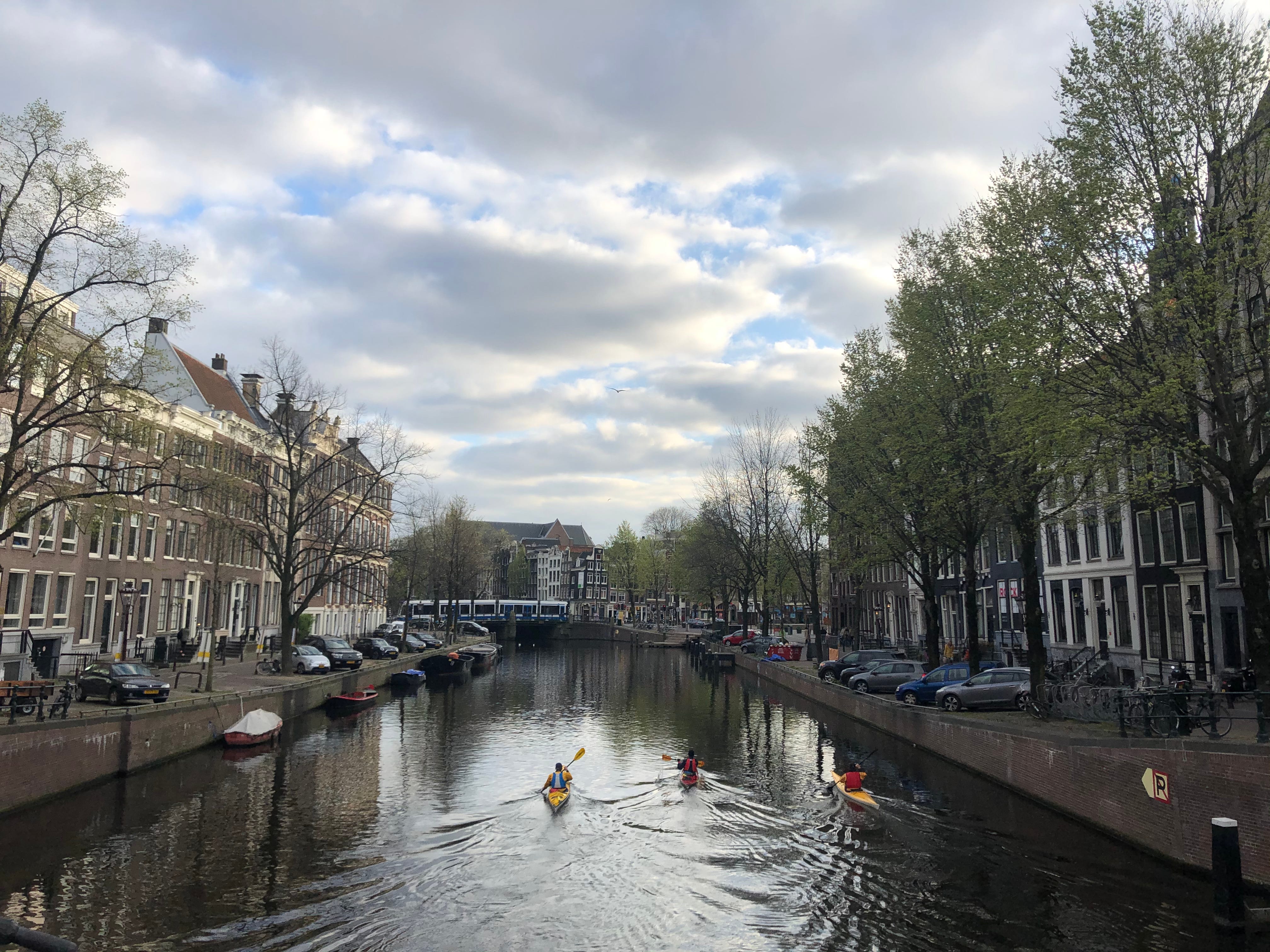
BOOM! Covid! Worldwide lockdown! End times! I had booked tickets to visit family in early April, but on March 12th everything came to a halt and Amsterdam quieted until further notice. People kayaked in the Prinsengracht canals. I took long walks around the house in total isolation. Hiring freeze! No jobs! Massive layoffs! So the job hunt paused indefinitely and I hunkered down to continue whatever journey this was going to be. And the feelings of helplessness and meaninglessness became easier to deal with. No one knew what the fuck anything meant, either. And I found a sense of comfort and connection in what was actually a very surreal, disembodied experience. I packed my bags and moved back to somewhere I felt safe, comfortable, somewhere without screaming neighbors telling me to go back to my country and about 300 euros cheaper a month. I took my boxes back to Rotterdam on April 2020, starting another cycle, another period altogether, but already feeling more like myself.
Rotterdam meant attainability. It had all the corners I’d known and loved and made my own for years. I could trace back parts of myself I hadn’t been able to access to in Amsterdam, and the joy I had felt for years. It was like giving my younger self back to me as a reminder of who I could be, who I was, and who I could become.
It wasn’t a coincidence that I’d moved right when the lockdowns were taking effect and the world shrank to the things I knew I needed. Reaching out to them felt like safety, it felt like home. And if I couldn’t cross the ocean, couldn’t be close to my family, then I needed to be in this home.
By the Summer of 2021, everything was different. I’d left my job even though I had no other options on the horizon. I interviewed for new jobs that broke my heart with their possibilities, applied to an MA in Paris, broke my heart again when I understood there was no way to afford it. Deciding to become self-employed by that Fall. Working again on my own terms. Just like that I was expanding, visiting home in January 2022, connecting all my previous selves, the versions of me that could’ve been in Venezuela, reconciling her with who I was then. There was a lot of who I was and could’ve been and would become, but I wasn’t despondent. I felt safe. I felt comfortable enough to change the way I was looking at things. When you’re not focused on leaving a job, leaving a place, on just scraping by, you allow your desire to expand finally blossom. You allow yourself the room to breathe. The room gets bigger. And you let it. You want it to be bigger, to contain more of you.
And there I was again, on a train to Paris in the Summer of 2022. I spent those months doing all the things I’d been wanting to do. It felt like another cycle was just around the corner, another time to start again. The Sun was heating everything up and people were so excited to be together again. We were a lonely city made into one big beast of laughter and joy and the irrepressible urge to live. And this time I was in the front seat of my body for all of it.
I moved back to Amsterdam this Fall, exactly three years after I had started that first job that first brought me here. I am in a wildly different time in my life. The opportunity to move fell in my hands two weeks into September, and by October first I was here. It was on a whim, really, but I’d been toying with the idea in my mind somewhere in the Summer, thinking I’d grown a bit too comfortable in Rotterdam. And I’d needed that for a while —I welcomed it— but the itch for more space was starting to grow. And there was the chance, and I took it, and everything happened quickly and much more easily than the first time I chose to live here. It wasn’t me in a room full of fears anymore. It was me in a room of what if’s, maybe’s, curiosity getting the better of me. What would it be like to be here just shy of 26? What would 21-year-old me think?
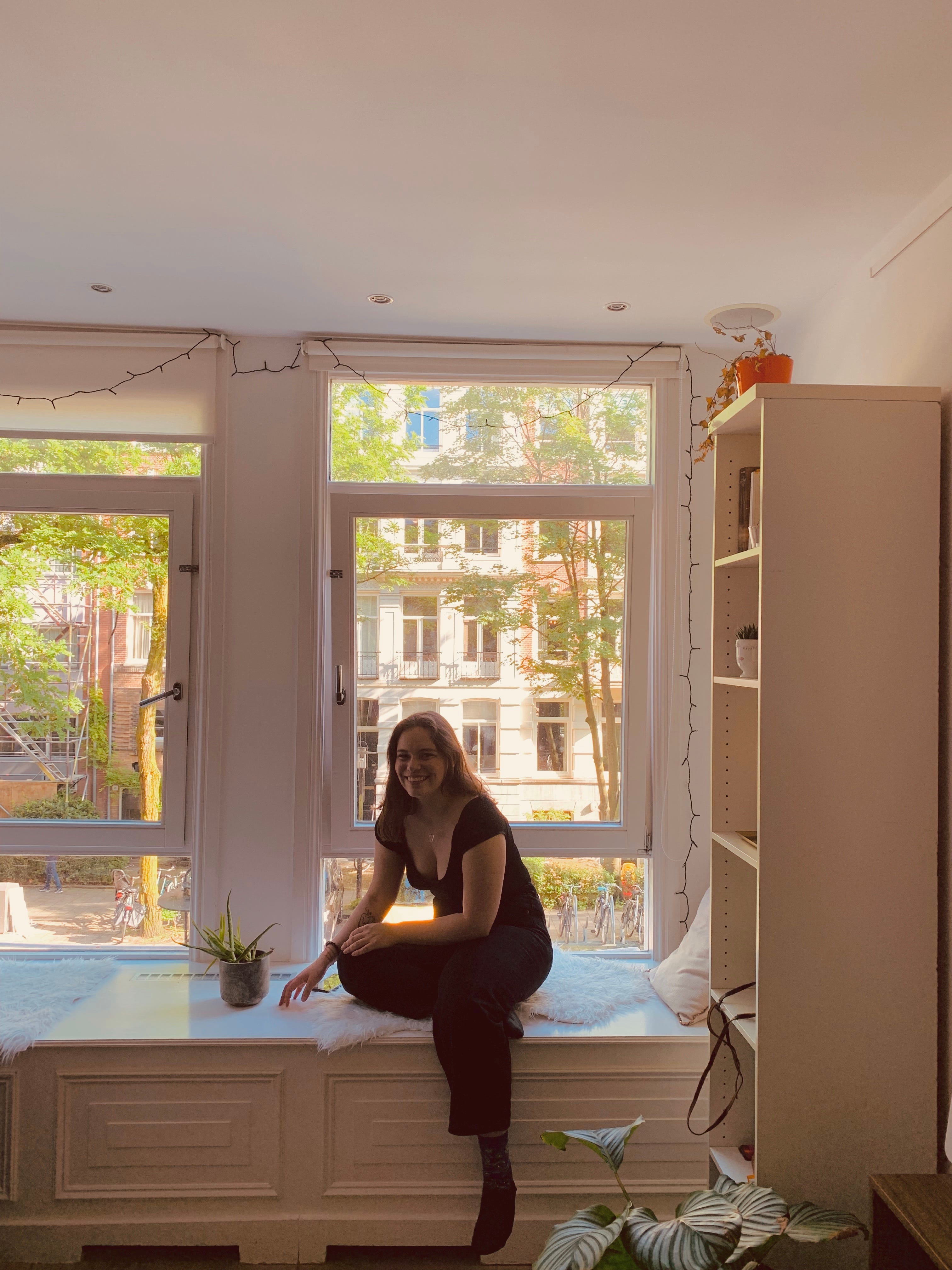
It’s still weird to think about living here again. Instead of gnawing loneliness, I seek connection everywhere, from chatting with the waitress at the café next to our flat to sitting next to a middle-aged lady at the movies, bonding over our love for Emma Thompson. I find little butterflies everywhere. I grieve a devastating loss and I expand again, make my body bigger in my mind, find space alongside the wonder and the brilliance of being in a place that used to feel so unreachable, so difficult to love. I let myself be wooed by the canal houses and the market and the little coincidences that smile back at you if you just pay a little more attention to them.
In the end, all I’ve done is become more of myself. Now I can listen to myself a lot more clearly. And that has made all the difference.
"which wasn't so much a problem rather than a new source of fear" I keep thinking of situations as problems but what they really are is sources of fear. The quote and essay really resonated with me. Thank you!