

#25 Power, Politics, Freedom
about a world where your existence is political
The first introduction I ever had to wealth and poverty was watching my dad read a book one evening, I must've been around 6 or 7; it was called Rich Dad Poor Dad. I remember it because it was one of the first times I read the words rich and poor alongside something like dad, someone who is my family, and it made me think about what that meant. At the time and up to my early teens, a lot of the things I had or the ways we lived seemed ordinary. It wasn't until I was around fifteen years old that the reality of wealth —who has it and who doesn't, and by default, who wants it— became increasingly apparent.
In the context of Chavez's Venezuela, wealth and status were repudiated by the pro-Chavez government, with Chavez himself citing the wealthy in Venezuela as “oligarchs”, and U.S.-government supporters, sympathizers, or businesspeople as “pitiyanqui”, people who support U.S.-led interventionism and in some way look up to or imitate U.S. culture. There were two parties: pro- or against Chavez's government. You have to give it to him —if Miraflores was the stage, Chavez was the lead mastermind— he would give oratories for up to 8 hours a day, hijacking the national airwaves, speaking about the good of socialism, and the power of the people in a nation that continued rising up, a strong, working Venezuela.
In the background, PDVSA (Venezuelan state-owned oil and natural gas company) became the primary source of income for the national economy, although no real money was ever quite seen by the country's residents. It was lining PDVSA's leaders’ pockets, in partnership with Chavez's government. Projects far and wide across the country began but were never completed due to a lack of funding. Social housing initiatives in Caracas, the capital, were carried out in parts, but many of the houses remain, precariously standing on the mountains surrounding the city, stacked atop each other in red and blue and pink bricks. To this day, they are vastly populated, dense, snaking higher and higher.
I went to a private school. But so did most of the children who were from most middle-to higher-income families in our city. The alternative was public, state-funded schools, with teachers who would strike continuously over the course of the school year as a way to protest their next-to-nothing salaries. There was no special needs education or nationwide support for increasing literacy, understanding sexual health, or preventing teenage pregnancy. Coupled with hyperinflation, the food crisis that peaked around 2014-2015, and the later hits to the economy (i.e. the pandemic years), the gap between the haves and have not's not only deepened. It widened to a degree of extreme poverty and forced migration, or to a relative amount of wealth and comfort to remain in the country.
The middle “class” as I had known it in my very early years had given way to Venezuelans in Chile, Colombia, Mexico, and Perú. They faced xenophobia, violence, and mounting prejudice. Many of them were left to sleep in the streets due to the lack of housing and space in towns and cities across countries. Others were blamed for the rise in crime in the area. It was insinuated, more than once, that Venezuelan women were offering sex for money, reaching desperation due to not being hired anywhere else.
It became abundantly clear, especially in the latest migration wave (2018-2020, roughly speaking), that migration was no longer a pursuit for better economic conditions for those who could afford the plane ticket out —and the visas, work permits, or accommodation— it was for anyone willing to walk the border to Colombia on foot, or take the perilous journey of crossing the jungle, the Darien Gap. In case you haven't heard of it before, here is how the UNHCR describes it:
“The Darien Gap, which marks the border between Colombia and Panama, is one of the world’s most dangerous refugee and migrant routes, consisting of 5,000 square kilometers of tropical wilderness, steep mountains, and rivers. Crossings can take 10 days or more for the most vulnerable, who are exposed to natural hazards as well as criminal groups are known for perpetrating violence, including sexual abuse and robbery.”
From over here, in my comfortable home in Amsterdam, it's become increasingly clear that my migration story was about as cushiony as it gets. I immigrated at 18, for the purpose of pursuing higher education in the Netherlands, at one of Europe's most well-known universities. My family could afford to pay my tuition. I picked up jobs to help manage costs, but if push had come to shove, I could've relied on my family for more support. We could afford my plane ticket, and I could always travel with a stamped passport. I could visit home once a year. The last 8 years have been something like a dream. Whenever I read the news (which is not very often these days), I tend to shy away from googling Venezuela. And I found it difficult before, forgiving myself for it. Because information can only do so much before it exhausts you and paralyzes you, making you feel helpless. I imagine it a similar sense of despair to the one we feel when we read about climate change, late-stage capitalism and the like.
What makes this so intense is how close (literally and metaphorically) I feel to Venezuela. It's kind of easy to discuss something like climate change in comparison because it affects all of us —some of us more than others— it's easier to discuss work woes because my peers and I all need money to survive. It's easier to complain about overworking and being underpaid. It's not to begin a pissing contest about who's worse off in the current political/social/economic climate, but I am acutely aware of the difficulties I face and the ones children crossing the Darien Gap face. I am aware of the sheer size of the fear we both live with. Of the visions of a different life we both have. But we didn't sacrifice the same things to get here one day. And some of them won't make it out alive. And that's not playing the misery olympics - it's a fact.
I grew up in an environment where politics, power, and money were intertwined not in an insidious way or through a hidden agenda: they were blatantly displayed every time Chavez spoke on our TV or on the radio for hours and hours. We could see political allies, representatives, leaders, and their wives. We could notice the Rolexes lining their wrists or their lavish trips, properties worth millions across the globe. Outside, the flowers and fields grew over the rails that once promised to carry Venezuelans across states but weren't ever completed, while cars and buses kept pushing, crossing from one city to the next.
I grew up extremely aware of money, what it could do, where it would get me. Where it could get people who had it. And what happened to you if you didn't find it. I grew up seeing the way people without an expensive private insurance plan couldn't access proper medical treatment; how people would set up Go Fund Me pages, filled with thousand-dollar goals for treatments that I see people accessing in the Netherlands every day, covered by their insurance - if not covered, then partly subsidized - by the state. I saw people protesting for the right to an education, for the right to affordable food, for the right to build their lives in a safe country. For the right to live, not just struggle to survive.
I was shaped by all of these things. Through all of these fights. By the time I left in 2015, we had just witnessed one of the most intense periods of unrest in the country —Chavez had already passed away, but his government hadn't— and we were facing anything from toilet paper shortages to Harina PAN shortages, cornflour that fed us, produced in our own country. It is the cornerstone of meals across Venezuelan households, regardless of income or socio-economic status. By the time I left, I had spent most of my junior year in high school learning from home, streets barricaded by burning buses and tires, and months of unrest that demanded change. University students were shot by police and the national guard. 23-year-olds wore white. I was acutely aware of what I had and what they hadn't. Of the ways money would shape my reality now, and in the future.
Living in the Netherlands, I used to sneer at the Dam Square protests that seemingly took place every week. (They still do, at a lesser frequency). Housing protests. Anti-capitalist protests. Climate change protests. My first thought upon hearing of them was always about how the government doesn't care, how nothing they do was going to make a real dent in anything.
Then I notice how hopeless that sounded and how endlessly defeatist that was to think, lol. I suppose growing up in an environment where your vote doesn't matter and your voice is silenced at any cost does that to you. It's weird to watch people here protest and not get dragged or beaten by police. And I can imagine that sounds bleak.
Going home now is different. The economy is facing dollarization, an extremely wild concept to wrap my head around. We trade cash in U.S. dollars now, and in some parts of the country, dollars, bolivares (our national currency), and Colombian pesos. There’s an improvised dollar economy at our fingertips, but there are also complaints about salary differences between state employees and the private sector. In the meantime, I trade euros to U.S. dollars on every flight home since January 2022, including my recent visit last November. My grandmother, who is 74 years old, earns the equivalent of a $7 monthly pension. The concept of wealth and poverty is even more striking when you notice people who have worked up to five decades get the equivalent of two Amsterdam coffees in benefits a month. And it's not just the coffee prices here — a cappuccino in Valencia (my hometown) or Caracas also costs anywhere from $3.50 to $4.50 a cup. A pension that affords you two coffees: it sounds ludicrous, but it’s an everyday reality.
When I think about the money I make or the accounts I run, and the saving goals I have, I think about the ways money has fueled the choices I've been able to make. I think about how I can take trains and be somewhere else altogether after 3 hours, how I never have to line up for corn flour, and how I never have to think about crossing a jungle or taking buses for days, smuggled into faraway places where people have been fed stories about people like me and where I come from.
I think about how resilient Venezuelans are —those who emigrate, and those who remain— how resourceful they've become. How everything can become a side gig, how there's always been a way for young people to make it work and to make it through. How the responsibility falls on them —and me— to support our grandparents, and our parents, one day. How it's been over 20 years and I don't remember anything different.
I think about whether the gift of bending past imaginable breaking points is a gift or a burden. Whether there's anything political, social, or civic action can do in times where power has taken hold for over two decades. Whether it's the kind of challenge that only Venezuelans can face, like some sort of medieval times fairytale curse only we can break, or if community engagement —the kind that bonds countries together based on common interests— is what we really need.
Growing up in an environment like that has made it nearly impossible to ignore the fact that our existence is political, that our actions do not exist in a vacuum. That we are part of an interconnected, complicated society, that our role within it is defined by the power systems at play. To be politically disengaged feels like a betrayal; to be apolitical, an insult. I think about the ways in which politics have been called theater by the white, middle-aged American man who visited an old flatmate in our apartment back in 2019. I think about all the ways this phrase affords him separateness, as if he was a spectator, as if the show implied none of his involvement as if it rendered him innocent.
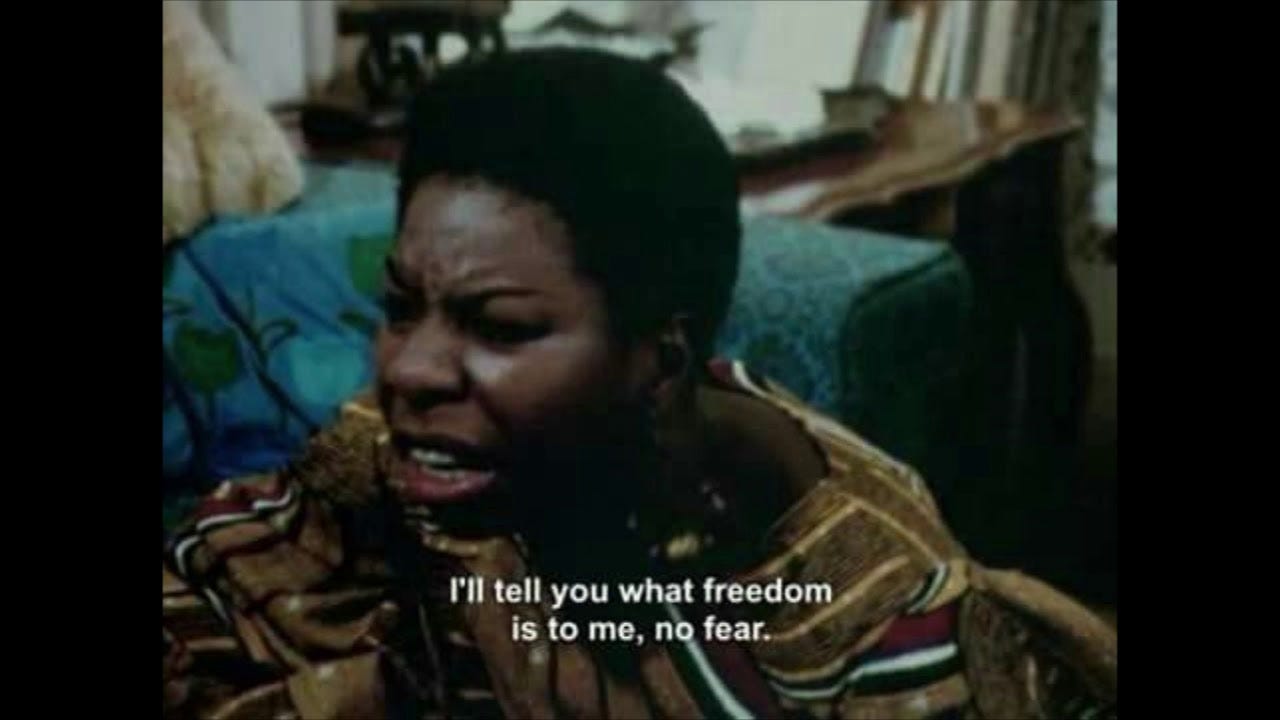
I think about how we cannot afford inaction. How we cannot afford to rise above the “theater” of politics. I think about whether he knew how invisible he’d made the world when he distanced himself from the very tool that keeps oppressing it. I think about a world where we are free; a world where freedom is the absence of fear. I think about what we could do, what we could build.
Me encanto!! Debo tener más o menos 8 años sin saber de ti, y vi que publicaste este espacio por linkedin. Que feliz me hace haber llegado aquí!! Beautifully written, and such an honest way to describe how conflicted most of our generation feels towards money, security and agency coming from a -middle to high income class- Venezuela. Loved it honestly, keep writing ❤️